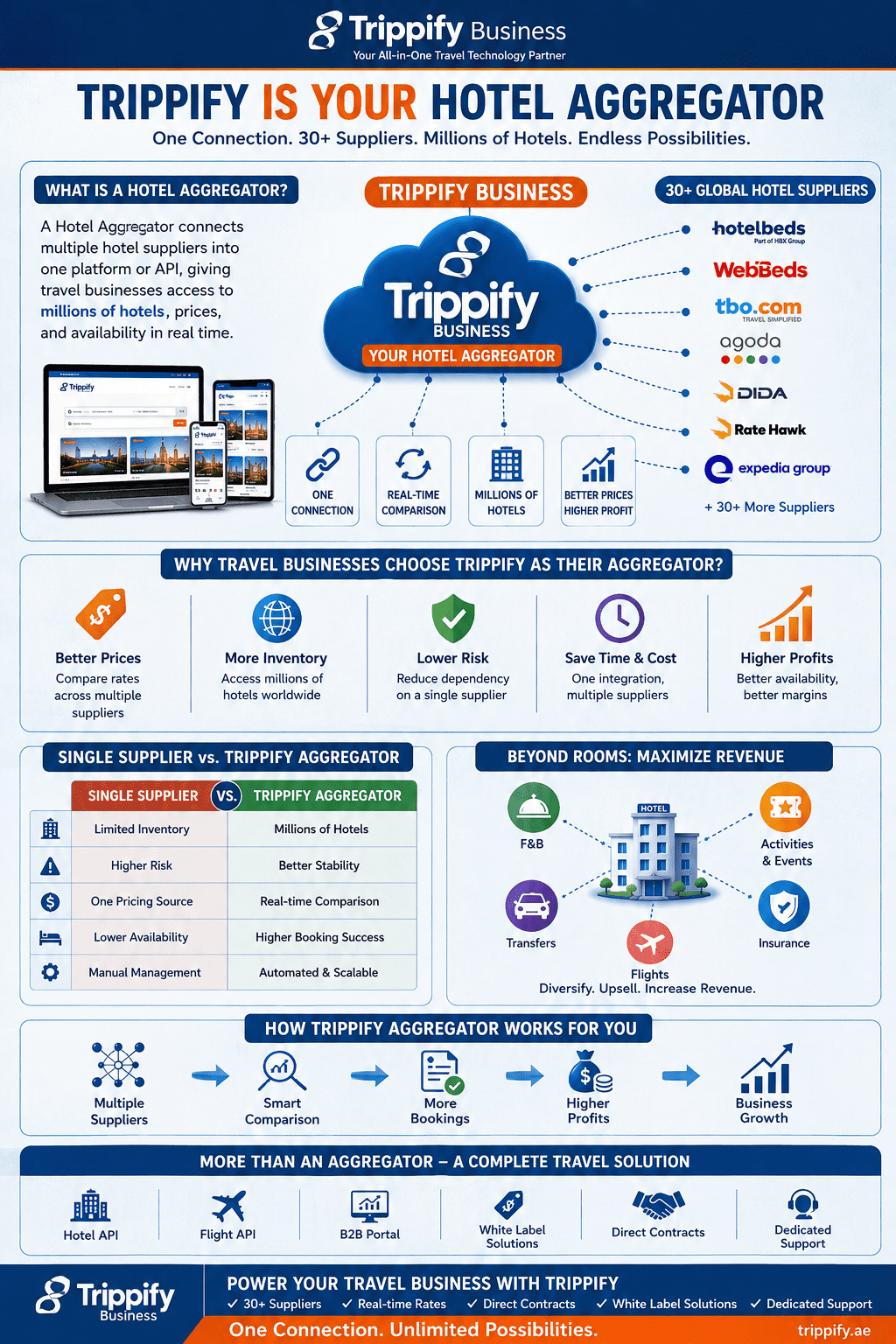
A hotel aggregator is a platform or API that connects multiple hotel suppliers, bedbanks, and wholesalers into a single integration. It enables travel agencies and OTAs to compare real-time rates, access broader inventory, reduce technical overhead, and build a more stable, scalable B2B travel business.
- A hotel aggregator replaces multiple separate supplier integrations with one centralized API connection.
- Using multiple suppliers simultaneously improves pricing competitiveness, availability, and reduces dependency risk.
- Real-time price comparison across suppliers is one of the core profit levers for successful OTAs.
- Direct hotel contracts combined with aggregation technology maximize both margins and inventory depth.
- White-label and API-based platforms allow new travel businesses to launch without large in-house technical teams.
A Hotel Aggregator has become one of the most important technologies for modern travel agencies and OTAs.
In today’s travel industry, success is no longer based only on having a website or competitive prices.
Modern travel companies now depend on:
- Strong hotel inventory
- Fast access to rates
- Stable systems
- Multi-supplier connectivity
That’s why Hotel Aggregators have become one of the most important technologies used by modern travel agencies, OTAs, and B2B travel companies.
Whether you are launching a new OTA or scaling an existing travel business, understanding hotel aggregation is essential for building a competitive and scalable company.
What is a Hotel Aggregator?
A Hotel Aggregator is a platform or API that connects multiple hotel suppliers, bedbanks, and wholesalers into a single system.
Instead of:
- Integrating with each supplier separately
- Managing multiple APIs
- Handling static data and mapping manually
- Solving availability and pricing issues supplier by supplier
Travel businesses can manage everything through one centralized solution.
Why Travel Companies Need a Hotel Aggregator
1. Lower Operational Costs
New travel businesses often face challenges such as:
- Development costs
- Bank guarantees
- Supplier deposits
- Technical integrations
- Managing multiple supplier systems
Aggregation technology significantly reduces these costs.
2. Real-Time Price Comparison
One of the biggest secrets behind successful OTAs is:
Comparing hotel prices across multiple suppliers in real time.
This helps businesses:
- Increase profit margins
- Offer competitive pricing
- Improve conversion rates
3. Better Hotel Coverage
Each supplier has different strengths:
- Europe
- Asia
- Luxury hotels
- Apartments
- Dynamic rates
- Direct contracts
Using multiple suppliers creates stronger global coverage.
4. Reduced Business Risk
Depending on only one supplier can cause:
- Service interruptions
- Higher prices
- Low availability
- Booking or payment issues
A multi-supplier strategy creates a more stable business model.
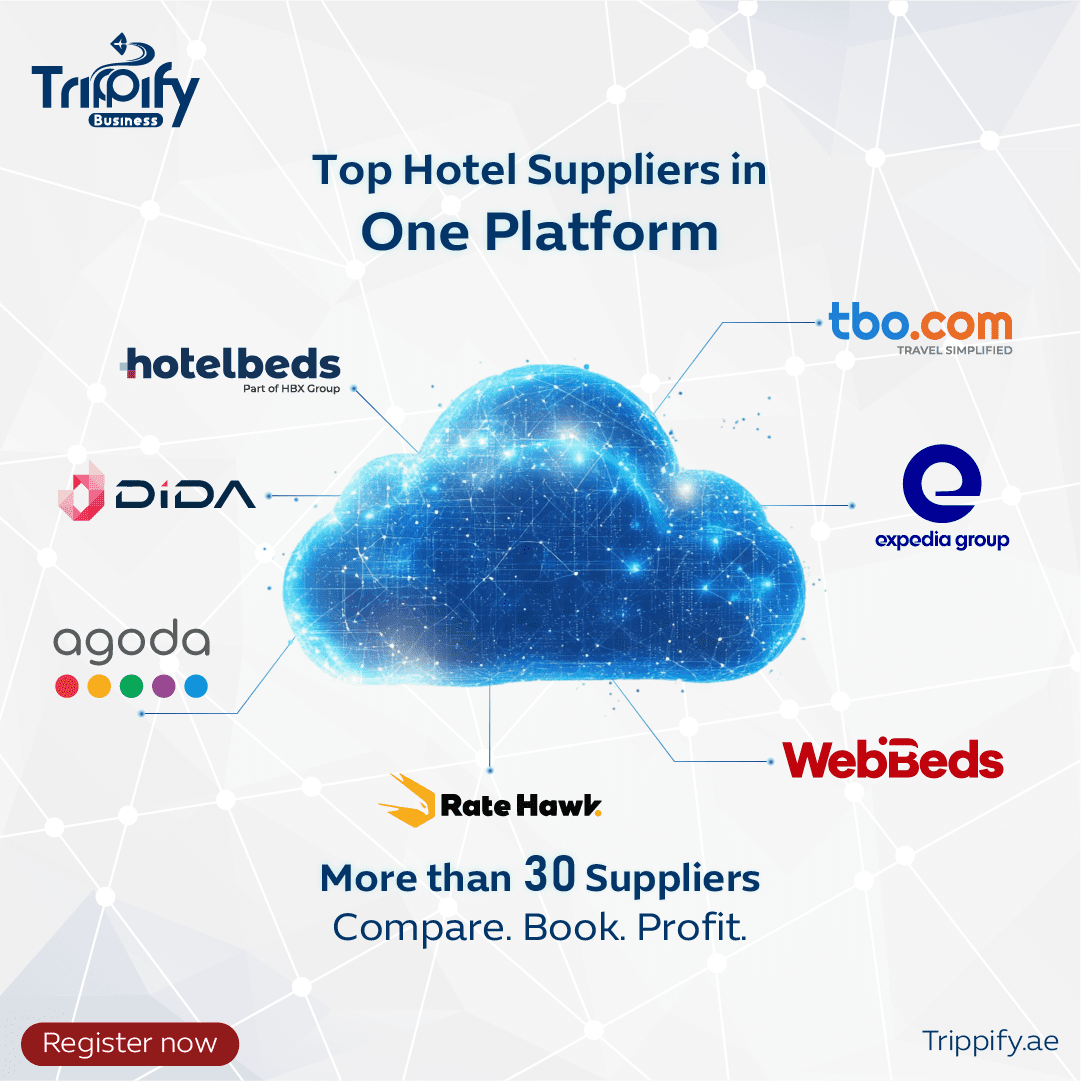
Leading Global Hotel Suppliers
Hotelbeds
One of the world’s largest hotel suppliers, known for:
- Huge hotel inventory
- Strong Europe & Middle East coverage
- Competitive pricing
- Strong B2B support
WebBeds
A major global bedbank offering:
- Strong pricing
- Wide contract portfolio
- Excellent B2B support
- Strong GCC and Asia coverage
Expedia Group
A global travel leader providing:
- Massive hotel inventory
- Dynamic pricing
- Worldwide coverage
- Large travel inventory network
Agoda
Very strong in the Asian market with:
- Competitive rates
- Apartment inventory
- Strong availability
- Southeast Asia expertise
RateHawk
Rapidly growing in:
- Europe
- Independent hotels
- Corporate travel
- B2B distribution
DidaTravel
Strong in Asian and Chinese markets with:
- Competitive pricing
- Direct contracts
- High hotel availability
TBO Holidays
Popular in the Middle East and India with:
- Easy integration
- Diverse inventory
- Strong B2B support
Is One Supplier Enough?
Simply put: No.
Each supplier has:
- Different pricing
- Different availability
- Different markets
- Different contracts
That’s why leading OTAs use:
- Multi Supplier Connectivity
- Aggregation Technology
- Smart Distribution Systems
To maximize sales and inventory performance.
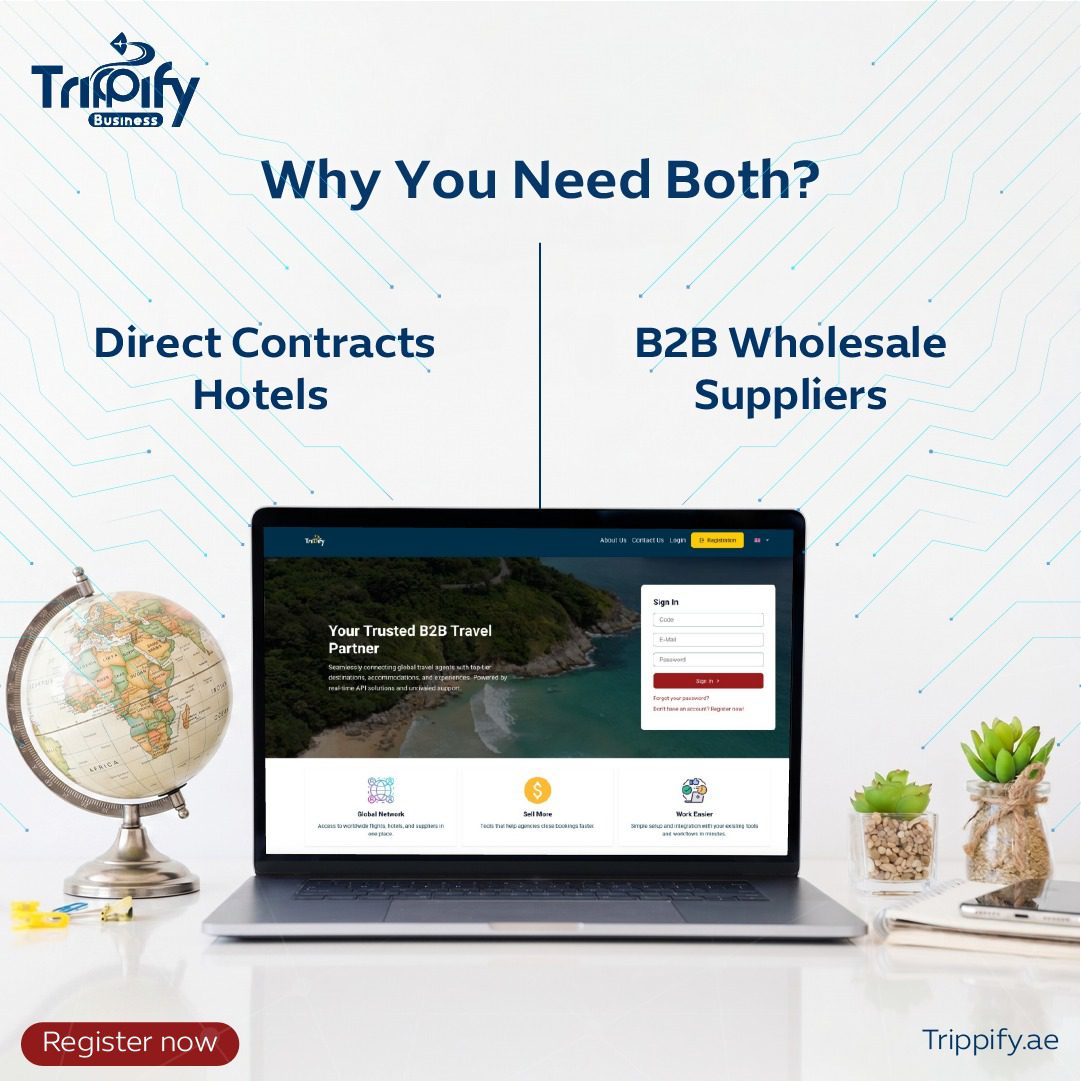
What About Direct Hotel Contracts?
While aggregators are essential, direct contracts remain highly valuable for companies looking to:
- Increase profit margins
- Secure exclusive pricing
- Control inventory
- Build stronger hotel partnerships
The most successful travel companies combine:
- Global Suppliers
- Direct Contracts
- Smart Aggregation Engines
- Advanced Distribution Technology
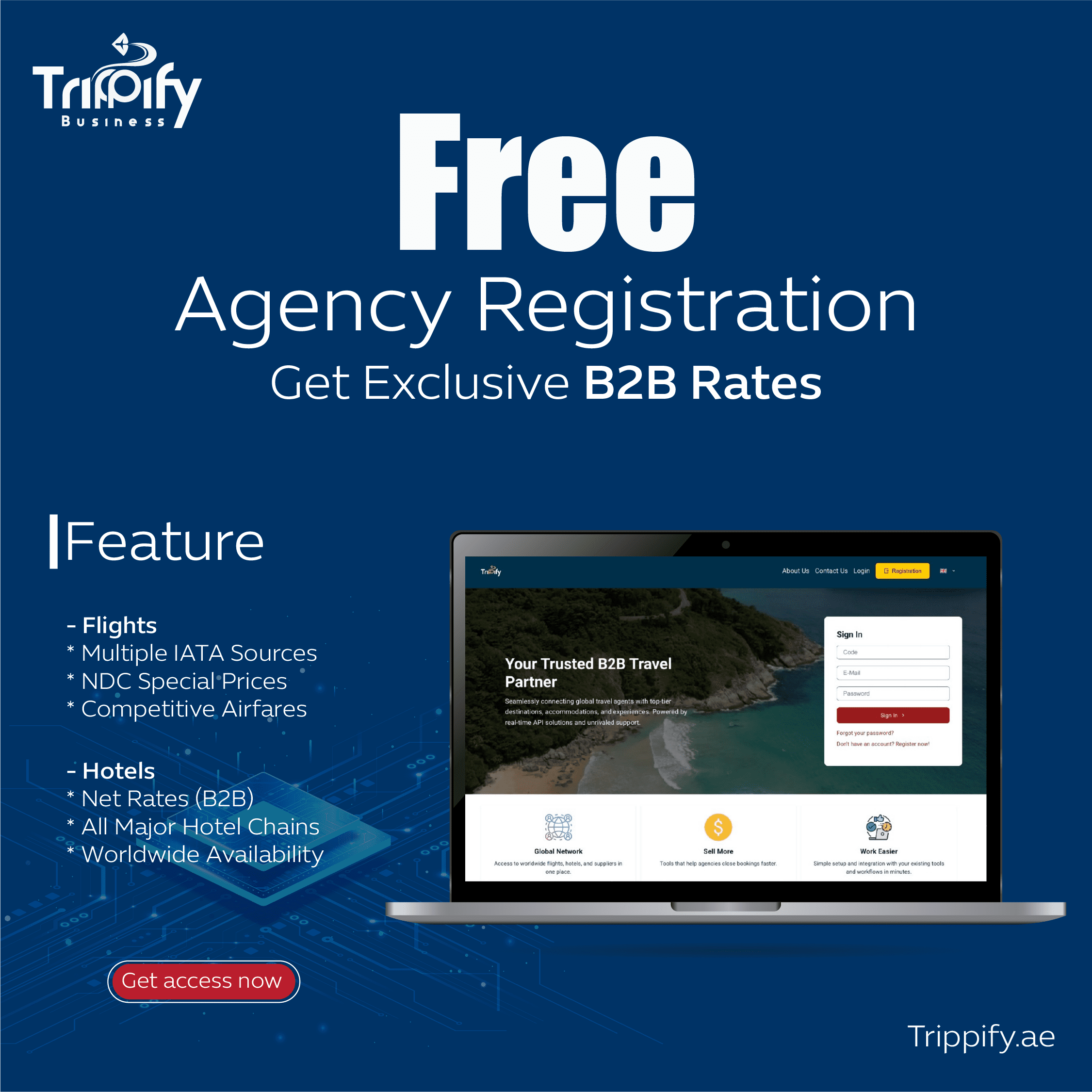
How Trippify Business Helps Travel Companies
Trippify Business provides more than just an API or portal.
We deliver a complete travel technology ecosystem designed to help travel businesses scale faster.
What We Offer
- Access to 30+ global suppliers
- Millions of hotels worldwide
- Real-time price comparison
- Direct hotel contracts
- Hotel API
- Flight API
- White Label OTA solutions
- B2B Travel Portal
- Advanced booking systems
- Technical & operational support
Who Is It For?
- Start-up travel agencies
- Traditional travel companies
- Freelance travel agents
- Businesses launching OTAs
- Companies expanding into B2B travel
- White Label travel businesses
The Future of Travel Technology
The future of travel depends on:
- API connectivity
- Smart distribution
- Automation
- Multi-supplier technology
- Real-time pricing access
Companies investing in travel technology today will lead tomorrow’s market.
FAQ
What is a Hotel Aggregator?
A system that connects multiple hotel suppliers into one platform or API.
Why do OTAs use multiple suppliers?
To improve pricing, availability, and operational stability.
What is the difference between Hotelbeds and WebBeds?
Each supplier has different hotel contracts, markets, and pricing strategies.
Are direct contracts important?
Yes. Direct contracts improve margins and offer exclusive pricing.
Can I launch an OTA without a large technical team?
Yes, using modern White Label and API solutions.
Start Your Travel Business with Trippify Business
Looking for:
- B2B Travel Portal
- Hotel API
- White Label OTA
- Multi Supplier Connectivity
- Travel Technology Solutions
Trippify Business helps travel companies launch, scale, and grow professionally in today’s competitive travel market.
Resignation Now : https://portal.trippify.net/b2b/login